The upcoming blockbuster Anthropic IPO will give many more investors a direct stake in one of the companies building the most capable artificial intelligence models.
It should also prompt a question for any investor thinking of buying the shares: what are your AI investment beliefs?
Anthropic takes positions on questions where reasonable investors might disagree. It wants every sufficiently capable model, open or closed, to go through mandatory safety testing, and governments to be able to block the deployment of models.
It backs controls on who can buy advanced chips. It refuses some uses of its models that the law allows, including some military work, and it wants its models to be able to disobey the businesses and people using them, and even Anthropic itself.
The company’s peers often take the other side. OpenAI, Google and SpaceXAI have agreed to let the Pentagon use their models for any lawful purpose, and OpenAI tells its models never to refuse a request unless the company’s own rules or a developer’s instructions require it. All these firms agree with Anthropic that models may be trained on creators’ work without their consent.
Few investors have a considered view of where they stand on these questions, and fewer still have written it down. That would matter less if AI were a small part of portfolios, but Alphabet, Amazon, Broadcom, Meta, Microsoft, Nvidia and SpaceXAI make up about a fifth of the MSCI World index.
Beliefs help settle what an investor asks of a company and how it votes, and they can rule a company out. They can also guide strategic asset allocation, the selection of managers and the design of their mandates.
Society’s reaction to AI – through its politics, courts and rules – will help decide what AI companies are worth. I don’t think an investor without clear AI investment beliefs can fully understand the risks that society’s reaction creates for its holdings. These are material risks and investors have fiduciary duties to understand them, so it is imperative that they do this work.
At PRI in Person in Amsterdam this month, I heard plenty about investors calling for AI policies and closer oversight, but very little about what those policies should say.
To help close this gap, today we’re publishing a research note and tool by Silicon Boundaries, a joint initiative of the Oxford Sustainable Finance Group and Theia Finance Labs. What do you believe about AI? sets out 15 questions on which reasonable investors might disagree.
Five concern the frontier, such as whether progress should be slowed. Three concern power, such as whether competition authorities should stop the industry concentrating in a few alliances of labs and cloud providers. The other seven concern how AI is used, among them military work and consent to training on creators’ work.
Each question has two answers, so in theory an investor could hold any of 32,768 sets of beliefs. In practice, beliefs come in bundles. An investor that fears catastrophe at the frontier tends to answer the other questions in that light.
“I don’t think an investor without clear AI investment beliefs can fully understand the risks that society’s reaction creates for its holdings”
From the bundles we see in the debate, we have built seven archetypes, each of which puts one risk first: catastrophe at the frontier (safety first), a rival power gaining a decisive lead (security first), the harm already arriving to workers, children and the communities that host data centres (fairness first), forgoing the benefits (growth first), a few firms controlling a technology everyone depends on (power spread), dependence on foreign models, chips and clouds (self-reliance), and investment running far ahead of returns (capital discipline).
Few investors are likely to fit a single archetype exactly. Our beliefs tool shows in about five minutes which archetypes an investor’s answers sit closest to.
Many institutions already act on views about how AI should develop, without having written them down. A portfolio manager who is overweight in data centres is, in effect, backing the view that AI should not be slowed, and the board or the beneficiaries may not share that view.
Written beliefs bring such differences into the open. An asset owner that has written down its beliefs can use them when it selects managers and sets their mandates. It can ask each manager which holdings depend on AI developing in a particular way, check the answers against its own beliefs and write limits into the mandate where the two differ.
One concern is that AI is moving too fast for beliefs to stay fixed. That is a reason to record beside each belief the evidence that would change it and to revisit those beliefs regularly. Clarifying beliefs also matters because when enough investors act on the same beliefs, through their votes, engagement, mandates and exclusions, they may help decide how AI develops.
“When enough investors act on the same beliefs, through their votes, engagement, mandates and exclusions, they may help decide how AI develops”
Climate offers a precedent. As with AI, uncertainty sits alongside measurable risk, exposures run across whole portfolios and investors can influence what happens.
Over the next few years, AI is likely to matter at least as much to portfolios as climate will. Investors who have written down what they believe about climate should now do the same for AI.
I expect asset owners to start asking their managers for statements of their AI beliefs and beneficiaries to ask the same of asset owners. My recommendation to investors is to get ahead of this, starting with our beliefs tool.
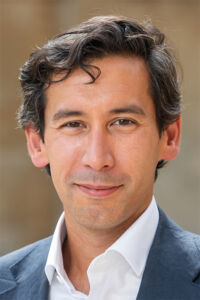
Ben Caldecott is founding director of the Oxford Sustainable Finance Group and associate professor of sustainable finance at the University of Oxford. He is the co-founder of Silicon Boundaries.